

"We're Trapped"
Jennifer's voice cracked on the phone. "We tried to stop the Apoquel, and we only made it three days."
Her lab mix, Bella, had been on Apoquel for eight months. The itching had been under control. Jennifer had done her research online and felt confident she could transition Bella off the medication naturally on her own.
She stopped the Apoquel and started giving Bella quercetin and omega-3s she had heard would help.
"By day two, she was scratching constantly. By day three, she had scratched herself raw in two places, and I've never seen her this bad, not even before we started Apoquel. I panicked and gave it to her again. And now, I feel like we're trapped."
The frustration in her voice was heartbreaking, but not surprising.
This is the Apoquel rebound effect, and it's one of the most common, most frustrating challenges we see at Three Happy Hounds.
Here's why it happens, and more importantly, what you can do about it.
What Is the Rebound Effect?
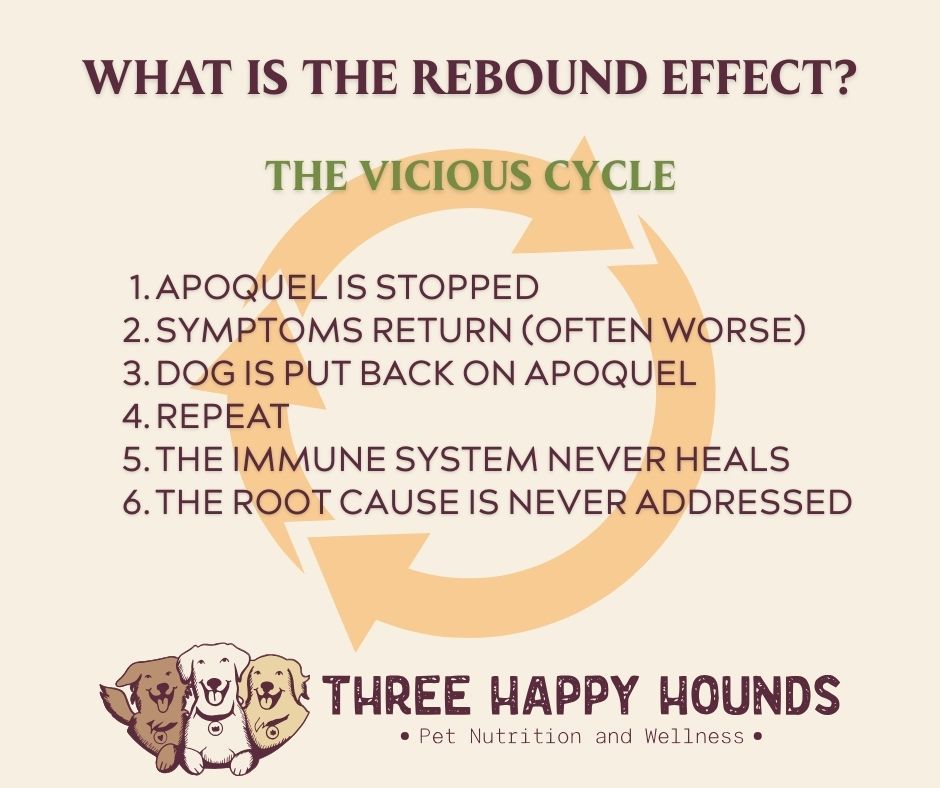
The rebound effect is simple to explain but devastating to experience:
When you stop Apoquel, symptoms often return worse than they were before you started.
Not just "back to normal" itchy. Worse. More intense. More desperate. Sometimes with new symptoms that weren't there before.
It feels like proof that your dog NEEDS Apoquel. That there's no other option, and you made a mistake trying to stop.
Why Does This Happen?
Remember from Part 1 that Apoquel works by suppressing your dog's immune system? It turns off the communication between immune cells so they can't respond to allergens, toxins, abnormal cells...or anything for that matter.
Here's the problem nobody talks about:
While the immune system is suppressed:
- Allergens keep triggering responses (you just can't see it)
- Inflammation continues at a cellular level
- Yeast and bacteria can overgrow unchecked
- The root cause keeps getting worse
- Your dog's body accumulates more and more "problems"
- Abnormal cells start multiplying unchecked
Think of it like this: imagine your house has a smoke detector that keeps going off because there's a small fire in the kitchen. Instead of putting out the fire, you remove the batteries from the smoke detector.
The alarm stops. You feel relief.
But the fire is still burning. In fact, it's getting bigger. You just can't hear the alarm anymore.
When you put the batteries back in the smoke detector (stop Apoquel), the alarm goes off LOUDER because the fire is now BIGGER than when you started.
That's the rebound effect.
What the Research Shows
Most of the rebound research has been done in mice, but the findings are significant.
A 2017 study published in the Journal of Pharmacology and Experimental Therapeutics gave mice a JAK inhibitor (Apoquel), then stopped it abruptly. The result? Severe rebound itching, worse than before treatment started.
In dogs, formal studies are limited. But ask any veterinarian who's worked with Apoquel, any holistic practitioner, or any pet parent who's tried to stop, they'll all tell you the same thing:
The rebound is real. It's common. And it's intense.
At Three Happy Hounds, we see it all the time. Dogs who were "manageable" before Apoquel become nearly frantic when it's stopped without proper preparation.
The Vicious Cycle
Here's what happens to most dogs on Apoquel:
Month 1-3: Apoquel works! Itching stops. Everyone is happy.
Month 3-6: Maybe some breakthrough itching. Vet increases dose or adds another medication.
Month 6-12: Try to stop. Rebound happens. Restart immediately.
Month 12+: Resigned to "my dog will be on this forever."
Meanwhile:
- The root cause was never addressed
- Gut health continues to decline
- Immune system gets weaker
- Yeast and bacteria overgrow
- Food sensitivities may increase
- The body gets more and more out of balance
Each month on Apoquel without addressing root causes makes the eventual rebound potentially worse.
This is why we're so passionate about helping dogs get off this medication, but doing it the RIGHT way, with proper support.
Why "Just Stopping" Doesn't Work
We get calls every week from pet parents who tried to stop Apoquel cold turkey.
"I just stopped giving it to him."
Within 2-5 days, the rebound hits. Hard.
Why doesn't this work?
Because you haven't:
- Identified what's triggering the allergies
- Healed the gut damage
- Rebuilt the immune system
- Reduced the yeast/bacteria overgrowth
- Eliminated food sensitivities
- Prepared the body for the transition
Stopping Apoquel without preparation is like removing the batteries from that smoke detector while the fire is still raging. Of course the symptoms come back worse.
What You Need BEFORE You Can Stop
This is why we created the Pippa's Way protocol. Getting off Apoquel isn't just about stopping the medication, it's about preparing your dog's body to handle allergens again without pharmaceutical suppression.
Before you attempt to taper, you need:
1. Testing to Identify Triggers Know what your dog is reacting to so you can avoid it during the transition
2. Gut Healing (2-3 months minimum) Repair the intestinal lining and rebalance the microbiome
3. Immune System Support Build up natural defenses with omega-3s, medicinal mushrooms, CBD, and proper nutrition
4. Detox Support Help the body clear out accumulated yeast, bacteria, and toxins
5. Natural Antihistamines On Hand Quercetin, nettle, and other natural support for breakthrough symptoms
6. A Slow Taper Plan Not cold turkey. Gradual reduction over weeks or months.
Without these pieces in place, the rebound will likely be severe.
We'll cover the complete protocol in Part 4 of this series, but the key point is this: preparation is everything.
Signs the Rebound Is Happening
If you've tried to stop Apoquel, you might see:
Within 24-72 hours:
- Increased scratching (more frequent, more intense)
- Excessive licking (paws, legs, belly)
- Head shaking or ear scratching
- Restlessness or inability to settle
Within 3-7 days:
- Red, inflamed skin (sometimes worse than before Apoquel)
- Hot spots developing
- Eye discharge or tearing
- Chewing at paws until raw
- Self-trauma from scratching
Behavioral changes:
- Irritability or aggression
- Poor sleep
- Decreased appetite
- Lethargy or depression
If you see these signs and restart Apoquel immediately, you've just confirmed what you've already suspected: your dog is not ready to stop yet.
And that's okay. It just means more preparation is needed.
"But My Dog NEEDS Apoquel"
We hear this often. And we understand why it feels that way.
When you've tried to stop and the rebound was so severe you had to restart within days, it absolutely feels like your dog needs this medication to survive.
But here's the reality check:
Your dog doesn't need Apoquel. Your dog needs:
- The root cause addressed
- The immune system rebuilt
- The gut healed
- The triggers eliminated
- Diet improvement
- A proper transition plan
With the right support and preparation, dogs can thrive without immune-suppressing medications. But it requires doing the work to support their bodies properly.
Apoquel is a crutch. And yes, sometimes crutches are necessary while you heal. But the goal should always be to heal well enough that you don't need the crutch anymore.
What Happens If You Stay On It?
Some pet parents decide the rebound is too hard, and choose to keep their dog on Apoquel indefinitely.
That's a personal choice, and we respect it. But you should know what that choice means:
Long-term Apoquel use means:
- Ongoing immune suppression
- Continued infection risk
- Potential cancer concerns
- Regular bloodwork monitoring
- Monthly medication costs ($60-90+)
- The root cause continues to worsen
- Potentially more health issues down the road
Again, we're not judging. We understand that sometimes it feels like the only option keep your dog on Apoquel.
We just want you to know there IS another path, if you're willing to do the work.
Jennifer's Story: The Rest of It
Remember Jennifer and Bella from the beginning?
After that failed attempt to stop Apoquel cold turkey, Jennifer came into our store frustrated and defeated.
We talked through what happened. We explained the rebound effect. We created a plan.
Here's what we did:
Started Bella on our full protocol while still on Apoquel:
- Glacier Peak testing (identified chicken, beef, and environmental triggers)
- Gut healing protocol
- Immune support supplements
- Diet changes to eliminate reactive foods
After several months of preparation, we started a SLOW, gradual taper off Apoquel that was customized for Bella's specific needs and response.
Was it easy? No.
Did she have some itchy days? Yes.
Did we adjust the plan along the way? Absolutely.
But months later, Bella was off Apoquel completely. No severe rebound. Minimal itching. Better energy. Shinier coat.
Jennifer cried happy tears this time.
"I didn't think it was possible," she said. "I thought we were trapped forever."
They weren't trapped. They just needed the right plan and professional support to navigate the transition successfully.
Your Next Step
If you're currently on Apoquel and worried about the rebound effect, or if you've already experienced it and feel stuck, here's what we recommend:
1. Don't Try to Stop Cold Turkey
You need preparation time. Keep your dog on Apoquel while you build the foundation.
2. Download Our Complete Free Guide
Get comprehensive information on:
- Understanding the rebound effect in detail
- Why proper preparation is essential
- The foundation you need before attempting to stop
- Questions to ask your vet
- Timeline expectations
DOWNLOAD YOUR FREE GUIDE
3. Start Building the Foundation NOW
Even while still on Apoquel, you can:
- Run food intolerance testing
- Start gut healing protocols
- Add immune support supplements
- Begin eliminating triggers
4. Work with a Professional
The rebound effect is complex and requires expertise to navigate successfully. Every dog responds differently, and attempting to taper without professional guidance often leads to frustration and failure.
Book a Pippa's Way consultation for:
- Personalized assessment of your dog's situation
- Customized preparation protocol
- Individual tapering plan based on YOUR dog's response
- Ongoing support and adjustments throughout the process
BOOK A CONSULTATION
Coming Up in This Series
Part 3: Natural Alternatives to Apoquel That Actually Work (Publishing next week)
The supplements, protocols, and approaches that address root causes and support true healing.
Part 4: The Pippa's Way Protocol for Getting Your Dog Off Apoquel Safely
Our complete 6-step framework with realistic timelines and what to expect at each stage.
You're Not Trapped
If there's one thing we want you to take away from this post, it's this:
The rebound effect is real, but it's not permanent. You're not trapped, and your dog isn't destined for lifelong Apoquel.
You just need:
- Understanding of what's happening
- Proper preparation
- The right support
- Time and patience
We've helped dozens of dogs successfully transition off Apoquel. Some were easy. Some took a year or more. But they all made it.
Bella made it. Your dog can too.
Take Action Now
Download the Complete Free Guide:
Everything you need to understand and overcome the rebound effect.
Get your FREE guide.
Book a Pippa's Way Consultation:
Work directly with Elaina to get a personalized plan for YOUR dog's transition off Apoquel.
Book with Elaina
Read the Other Posts in This Series:
- Part 1: Before You Start Apoquel
- Part 3: Natural Alternatives
- Part 4: The Pippa's Way Protocol (publishing in 2 weeks)
Share This Post:
Know someone feeling trapped by Apoquel? Share this resource.
About Three Happy Hounds & Pippa's Way
We're a pet health and wellness store in Fernley, Nevada, specializing in helping dogs transition off medications like Apoquel through nutrition, supplements, and holistic protocols, while working in partnership with your veternarian. We see the rebound effect regularly, and we know how to navigate it successfully.
You're not alone in this and we're here to help.
Questions? Contact us:
📧 Email: info@threehappyhounds.com
📞 Phone: 775.404.4084
🏪 Visit: 470 E. Main St. #120 Fernley, NV
🌐 Web: www.threehappyhounds.com
*This information is for educational purposes only and is not intended to diagnose, treat, cure, or prevent any disease. Always work with qualified veterinary professionals to create an individualized treatment plan for your pet.
The information presented here represents a comprehensive review of available data and clinical observations to help pet parents make informed decisions in partnership with their veterinarians.
Sources: Zoetis Apoquel prescribing information, FDA documentation, peer-reviewed veterinary studies, holistic veterinary medicine practitioners. Contact our store for complete list of sources.